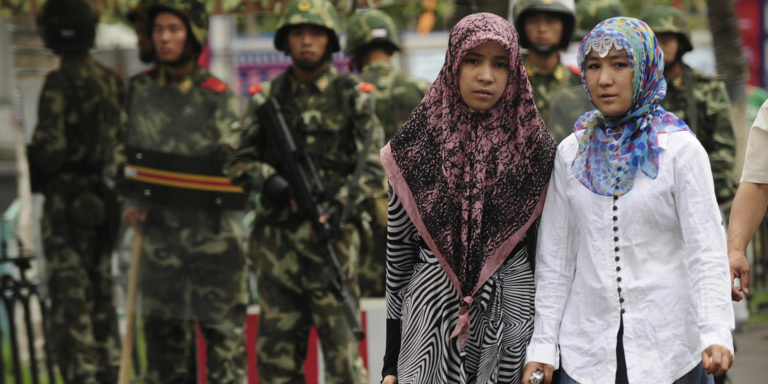
On February 4th, 2019, the UN received a joint statement from a group of NGOs proclaiming that the United Nations Human Rights Council (UNHRC) should negotiate a mandate that develops an international investigation mission in Xinjiang, China. In this territory, approximately one-million Uyghurs and other Muslim groups are being held hostage in detention camps. Many people declare that this is a clear violation of human rights, stating the camps are “an archipelago of concentration camps”. However, China has been firm in justifying these camps as a tool to combat Islamic extremism threats, downplaying their cruel intentions by calling them “vocational education centres” for those guilty of minor crimes. While there are many barriers in the way of other states’ intervening on the matter, it is important that China is held accountable for these atrocities.
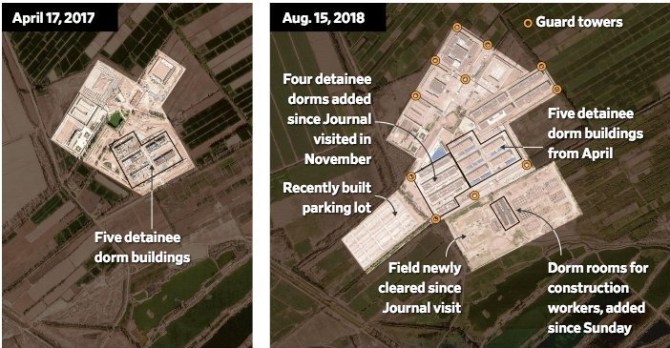
Despite China being highly committed to denying human rights violations, there is a multitude of evidence that asserts this is the reality of the Xinjiang region. Adrian Zenz, a German academic, researched various Xinjiang government documents that provide details regarding construction on the building projects. The documents highlight the need for strong security features, such as watchtowers, razor wire fences, surveillance systems, and guardrooms. Additionally, evidence conducted by BBC interviews highlights consistent testimonies between eight Uyghur people living abroad now. Conditions inside the camps presumably force detainees to worship the ruling Communist Party, learn to speak Mandarin, sing revolutionary songs, study the thought of President Xi, renounce religion, eat pork, and drink alcohol. They also experience physical and verbal punishment. Muslims have been reported to be detained for a variety of reasons, such as: wearing long beards and face veils, sharing Islamic holiday messages on social media, and praying at mosques. However, the only way to “set the record straight” on these reported human rights violations would be by conducting an international fact-finding mission by the High Commissioner to report to the UNHRC.
Interestingly, China is a member of the UNHRC, in which the country is expected to “uphold the highest standard of human rights”. It is evident that the country is infringing upon its role. Human Rights Watch Executive Director, Kenneth Roth, asserts that the UNHRC’s integrity rests upon holding China accountable. If the UNHRC truly promotes human rights, the bare minimum should be to have a resolution mandating a fact-finding mission in the territory. However, this remains difficult to achieve due to China’s rising power and influence over outside states.
While Trump’s administration has placed tariffs on China over unfair trade in the past, it would not pressure China over human rights violations. This is because China remains to be the United States greatest creditor, holding over a trillion dollars in U.S. Treasury securities. Thus, American businesses rely on Chinese low-wage labor workers in order to increase profits most efficiently. Furthermore, Muslim countries such as Iran and Saudia Arabia, remain shockingly silent. For example, Prince Mohammed bin Salman publically showed support over China’s war on terrorism as a means to protect national security.
Since the world does not have an overarching government, global governance is used to reflect international affairs through organizations such as the UN, in order to establish “international peace and security”. However, since China is one of five permanent member’s of the UN Security Council, it has the ability to veto any substantive decisions, thus making decisions that threaten their national interests stalled. Despite this, staying silent on Xinjiang’s human rights violations undermines the legitimacy of the UN as the standard to promote human rights. Thus, an international fact-finding mission through the UNRHC to finally hold China accountable is needed.
 PoliticsWithSophia